Toxic to dogs and cats
Everything dogs and cats shouldn’t eat, on one page. Print it and put it on your fridge.
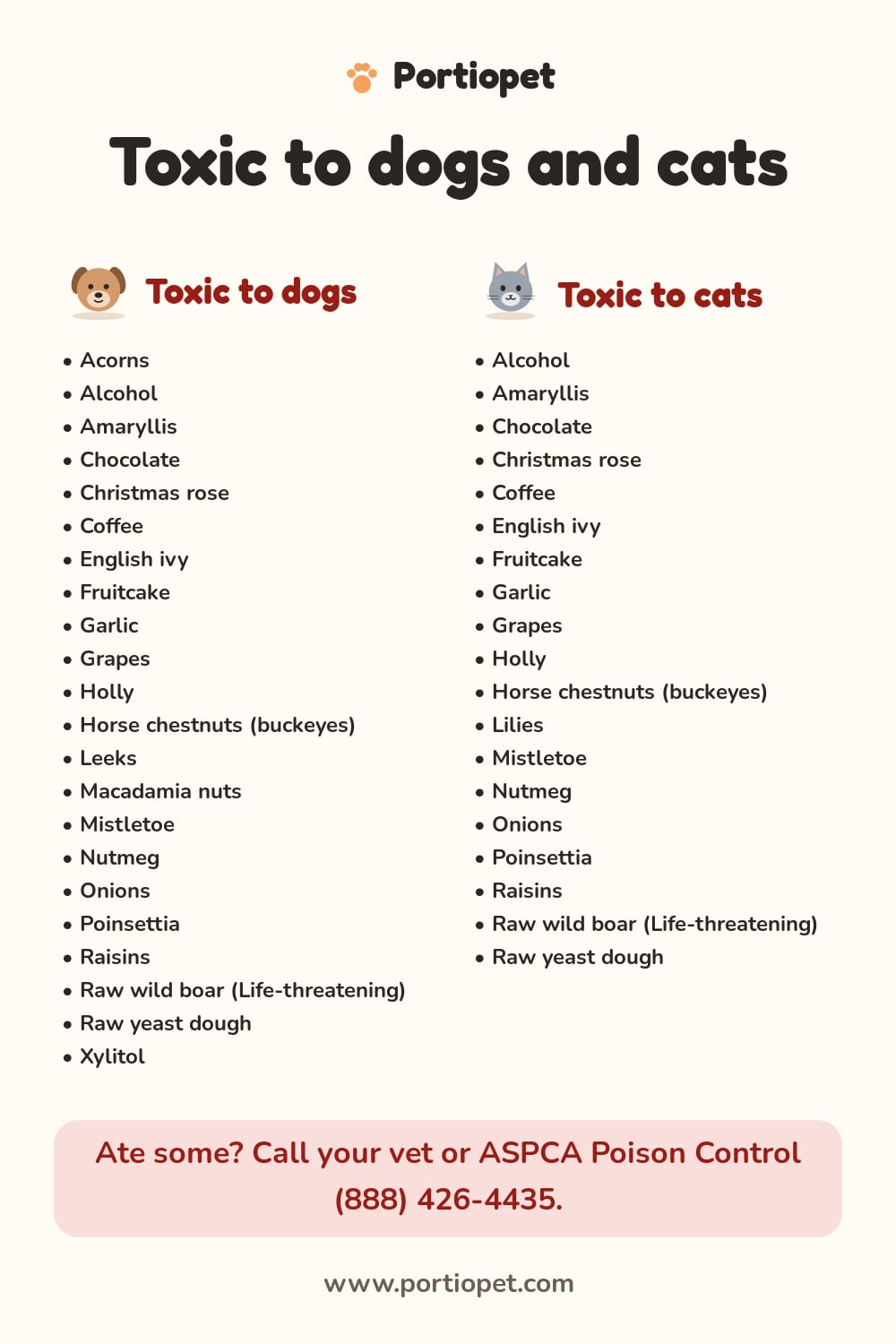
Your pet ate something on this list?
Call your vet or an emergency vet clinic right away, even if your pet seems fine. You can also call ASPCA Animal Poison Control at (888) 426-4435 or the Pet Poison Helpline at (855) 764-7661 (a fee may apply). Tell them what your pet ate, how much and when.
- ASPCA Animal Poison Control: (888) 426-4435 (a fee may apply)
- Pet Poison Helpline: (855) 764-7661 (a fee may apply)
- Don’t make your pet vomit unless a vet tells you to.
Toxic to dogs
- AcornsAcorns can cause kidney failure and liver damage in dogs, says the Merck Veterinary Manual; sometimes they only cause a blockage.
- AlcoholAlcohol is absorbed quickly and can cause vomiting, diarrhea, incoordination, breathing difficulty, tremors, coma and death (ASPCA).
- AmaryllisAmaryllis is toxic to dogs, and the bulb is the most poisonous part (ASPCA, Pet Poison Helpline).
- ChocolateChocolate contains theobromine and caffeine (methylxanthines), which can cause vomiting, diarrhea, restlessness, abnormal heart rhythm, tremors and seizures.
- Christmas roseASPCA lists the Christmas rose (Helleborus niger) as toxic to dogs.
- CoffeeCaffeine is a methylxanthine like the theobromine in chocolate.
- English ivyASPCA lists English ivy as toxic to dogs; the leaves are more toxic than the berries.
- FruitcakeFruitcake contains raisins, which can cause kidney failure in dogs.
- GarlicLike onions, garlic belongs to the Allium genus and damages red blood cells.
- GrapesGrapes can cause acute kidney failure in dogs.
- HollyASPCA lists holly leaves and berries as toxic to dogs, though of low toxicity.
- Horse chestnuts (buckeyes)Horse chestnuts (buckeyes), the shiny brown nuts from the park, are toxic to dogs (ASPCA).
- LeeksLeeks belong to the Allium genus, like onions and garlic, and can damage red blood cells.
- Macadamia nutsMacadamia nuts cause weakness, vomiting, tremors, incoordination and fever in dogs within 12 hours.
- MistletoeASPCA lists American mistletoe as toxic to dogs, and European mistletoe has no ASPCA entry.
- NutmegNutmeg contains a toxin called myristicin.
- OnionsOnions belong to the Allium genus and damage red blood cells, which can lead to anemia.
- PoinsettiaASPCA lists poinsettia as toxic to dogs: the milky sap irritates the mouth and stomach and can cause vomiting.
- RaisinsRaisins are dried grapes and can cause acute kidney failure just like grapes.
- Raw wild boar · Life-threateningIn dogs, Aujeszky’s disease (pseudorabies) is always fatal, with no vaccine or treatment.
- Raw yeast doughRaw yeast dough keeps rising in the warm stomach, bloats it severely and can lead to a twisted stomach.
- XylitolIn dogs, xylitol triggers a strong insulin release; blood sugar can drop dangerously within 10 to 60 minutes.
Toxic to cats
- AlcoholAlcohol quickly causes lethargy, wobbliness and vomiting in cats, and in severe cases breathing problems, coma and death (Pet Poison Helpline, ASPCA).
- AmaryllisASPCA and Cornell list amaryllis as toxic to cats, and the bulb is the most poisonous part.
- ChocolateChocolate contains theobromine and caffeine, which can cause abnormal heart rhythms, tremors, depression and seizures.
- Christmas roseASPCA lists the Christmas rose (Helleborus niger) as toxic to cats.
- CoffeeCaffeine is a methylxanthine like the theobromine in chocolate.
- English ivyASPCA lists English ivy as toxic to cats; the leaves are more toxic than the berries.
- FruitcakeFruitcake contains raisins, which Cornell lists as toxic to cats.
- GarlicGarlic belongs to the Allium genus, damages red blood cells and is 3–5 times more toxic than onion.
- GrapesCornell lists grapes as toxic to cats, so don't give any. They cause kidney failure in dogs; for cats there are only isolated reports (Merck: anecdotal, one case).
- HollyASPCA and Cornell list holly as toxic to cats, though of low toxicity.
- Horse chestnuts (buckeyes)Horse chestnuts (buckeyes), the shiny brown nuts from the park, are toxic to cats (ASPCA).
- LiliesTrue lilies (Lilium) and daylilies (Hemerocallis) are extremely toxic to cats.
- MistletoeASPCA lists American mistletoe as toxic to cats, and Cornell includes mistletoe among toxic plants.
- NutmegNutmeg contains a toxin called myristicin that is toxic to cats and dogs in large amounts (Pet Poison Helpline).
- OnionsOnions (Allium) damage red blood cells.
- PoinsettiaASPCA lists poinsettia as toxic to cats; the sap irritates the mouth and stomach.
- RaisinsRaisins are dried grapes, and Cornell lists them as toxic to cats, so don't give any. They cause kidney failure in dogs; for cats there are only isolated reports.
- Raw wild boar · Life-threateningIn cats, Aujeszky’s disease (pseudorabies) is always fatal.
- Raw yeast doughRaw yeast dough rises in the stomach and bloats it; the yeast produces alcohol, causing alcohol poisoning.
This list shows everything rated “Toxic” or “Life-threatening” on Portiopet – each rating has its source on its own page. It isn’t complete: if something’s missing, ask your vet when in doubt.
Questions
What is most dangerous for dogs?
For example chocolate, grapes and raisins, xylitol, onions and garlic, macadamia nuts and raw wild boar. The full list is above, each rating with its source.
What is most dangerous for cats?
For example lilies – even the pollen can damage the kidneys –, onions and garlic, chocolate, grapes and alcohol. The full list is above.
What should I do if my pet ate something toxic?
Call your vet or an emergency vet clinic right away, even if your pet seems fine. You can also call ASPCA Animal Poison Control at (888) 426-4435. Don’t make your pet vomit unless a vet tells you to.